
Practice News
More Reasons to Floss and Visit the Dentist: Oral Health, Brain & Stroke Links
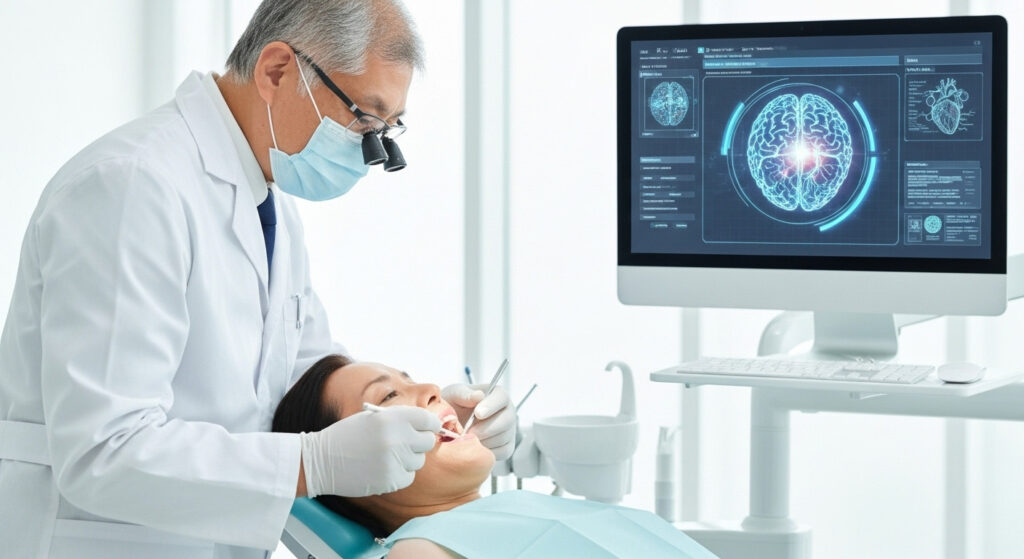
When we talk about flossing and regular cleanings at Aiea Family Dental, it’s easy to think only about cavities or gum bleeding. But recent evidence shows your mouth may also impact your brain and heart health. Two new studies published in Neurology Open Access expand the reasons to keep your gums healthy.
When we talk about flossing and regular cleanings at Aiea Family Dental, it’s easy to think only about cavities or gum bleeding. But recent evidence shows your mouth may also impact your brain and heart health. Two new studies published in Neurology Open Access expand the reasons to keep your gums healthy.
WMHs are bright spots seen on brain MRI scans. They indicate damage or changes in the brain’s white matter — the nerve fibers that connect brain regions. These changes are tied to conditions like cerebral small-vessel disease (CSVD), cognitive decline, balance issues, and higher stroke risk.
Researchers looked at 1,143 older adults (average age ~77) and found that those with gum disease had a median WMH volume of 2.83% of total brain volume vs. ~2.52% in those without. 28% of those with gum disease fell into the highest WMH volume group vs. 19% without. Gum disease was independently associated with ~56% higher odds of elevated WMH volume after adjusting for other risk factors.
Gum disease is a chronic inflammatory condition. That inflammation may affect small blood vessels — including in the brain — and contribute to white matter changes.
Another study followed nearly 6,000 adults (average age ~63) for 20 years.
Poor oral health may signal — or even contribute to — broader vascular inflammation and damage. Keeping your gums healthy could reduce your risk for serious conditions like stroke and heart disease.
“Flossing and regular cleanings may be simple, but the impact of oral inflammation may ripple into your brain and circulation.”
We offer:
Book your next cleaning or checkup today: Contact us or call us to schedule. Your smile — and your whole body — will thank you.